The Oceanic Platform of the Canary Islands (PLOCAN) is once again bringing marine science into classrooms across Gran Canaria during this school year through the second edition of the educational projects Edusen and Edublue, an initiative that will enable more than 500 students and 40 teachers from 25 schools on the island to gain first-hand exposure to real marine research, sustainability, and technological innovation linked to the sea.
One of the participating schools, IES Alonso Quesada, hosted a session today in which students took part in assembling ocean sensors and learned how upcoming fieldwork focused on collecting water samples is prepared. This hands-on experience was led by PLOCAN environmental educator Carlos Pina and designed to show, in an accessible way, how the scientific method is applied to the marine environment.
The session also highlighted the value of this type of project in sparking scientific curiosity and connecting young people with the ocean environment that surrounds them.
Edusen and Edublue are funded by the Department of Education and Youth of the Cabildo de Gran Canaria, as part of its commitment to education, sustainability, and the promotion of scientific vocations among the island’s youth. The island institution’s contribution amounts to 49,860 euros, of which 24,860 euros correspond to Edublue and 25,000 euros are allocated to Edusen. The head of the department, Olaia Morán, attended today’s activity to see first-hand how this new edition of the projects is being carried out.
During the session, 4th-year secondary school students and 1st-year baccalaureate students worked with ocean sensor components and made progress in planning future field activities linked to the project.
Edusen and Edublue aim to bring marine science into the classroom, strengthen environmental awareness of the oceans and their conservation, and foster the interest of new generations in science, technology, engineering, arts and mathematics (STEAM). They also seek to showcase the marine environment as a source of knowledge, innovation, and future opportunities for the Canary Islands, helping students identify real academic and career paths related to science and the sea.
Councillor Olaia Morán stated that, “Through the Cabildo, we have two different projects with PLOCAN, Edusen and Edublue, through which we want to raise young people’s awareness of the environment and bring them closer to STEM careers in science, so that they can discover all the good and beautiful things we have on the island, because we have the privilege of being surrounded by the sea, and we must love it, understand it and care for it.”
According to Carlos Pina, “With initiatives such as Edusen and Edublue, PLOCAN reaffirms its commitment to education, sustainability, and the promotion of young talent in the Canary Islands, bringing real scientific experiences into the classroom and showing that the Archipelago is also a benchmark for science, innovation, and high-level knowledge linked to the ocean.”
In the case of Edusen, the initiative focuses on promoting ocean literacy, understood as knowledge and understanding of the reciprocal influence between the oceans and humanity. Through this project, students learn about Essential Ocean Variables, such as sea level, sea surface temperature, and underwater noise, and understand their importance for ocean health.
EDUBLUE focuses on assembling a model of a floating wind or solar device integrated with renewable hydrogen generation. Its main objective is to compare the impact of generating this type of energy with traditional generation based on fossil fuels. The project seeks to measure the environmental impact of both types of energy generation in terms of CO2 emissions and underwater noise.
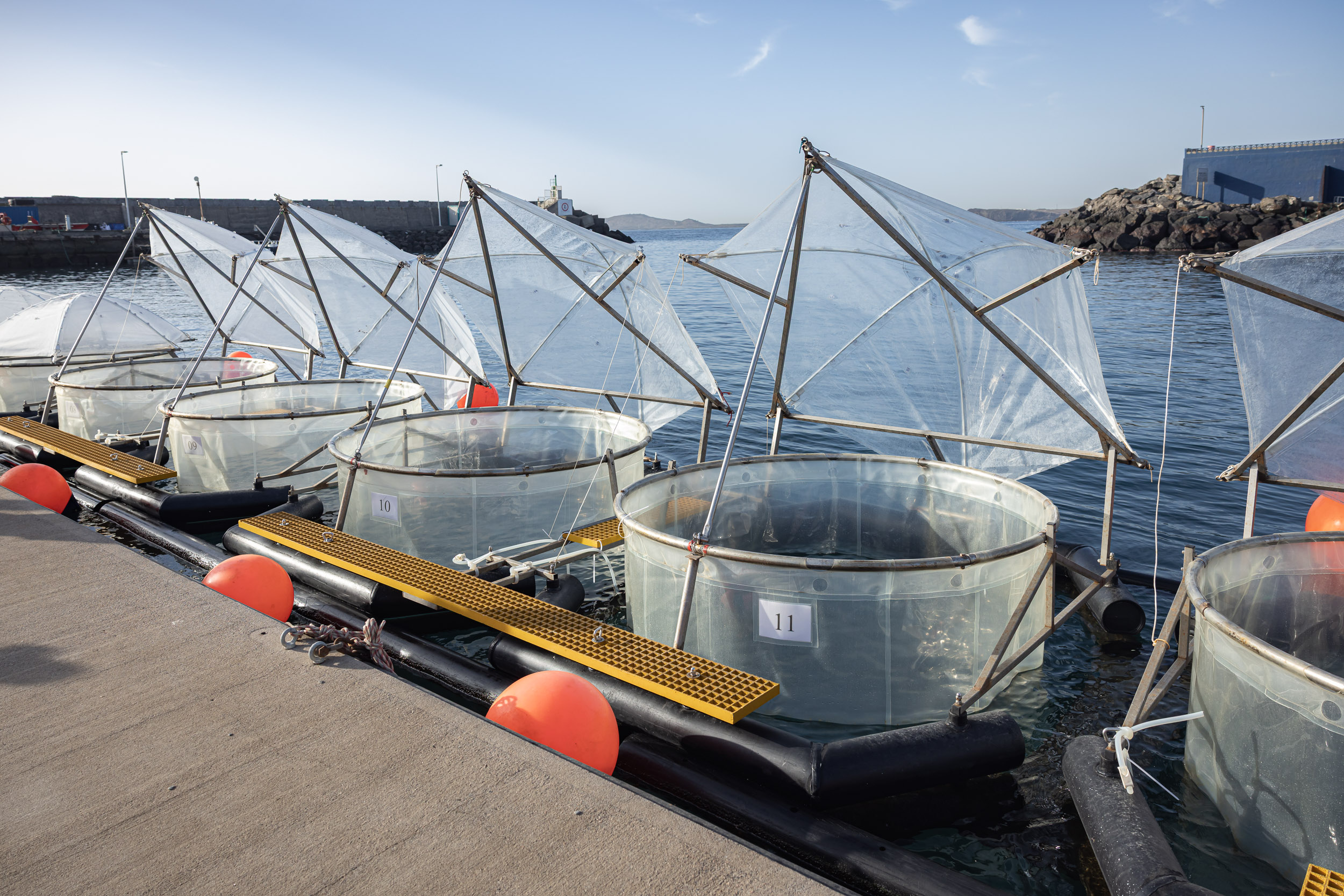
Hands-on work with sensors and field activities helps strengthen students’ connection with the local environment and explore the marine biodiversity around the Islands through technology applied to observation and analysis.
El enfoque práctico es uno de los aspectos más valorados de estos proyectos, ya que permite al alumnado desarrollar habilidades técnicas a través del montaje de dispositivos, la observación, la toma de datos y su análisis posterior. Esta metodología contribuye no sólo a comprender mejor los ecosistemas marinos, sino también a fomentar la innovación, la creatividad y la adopción de prácticas sostenibles desde edades tempranas.