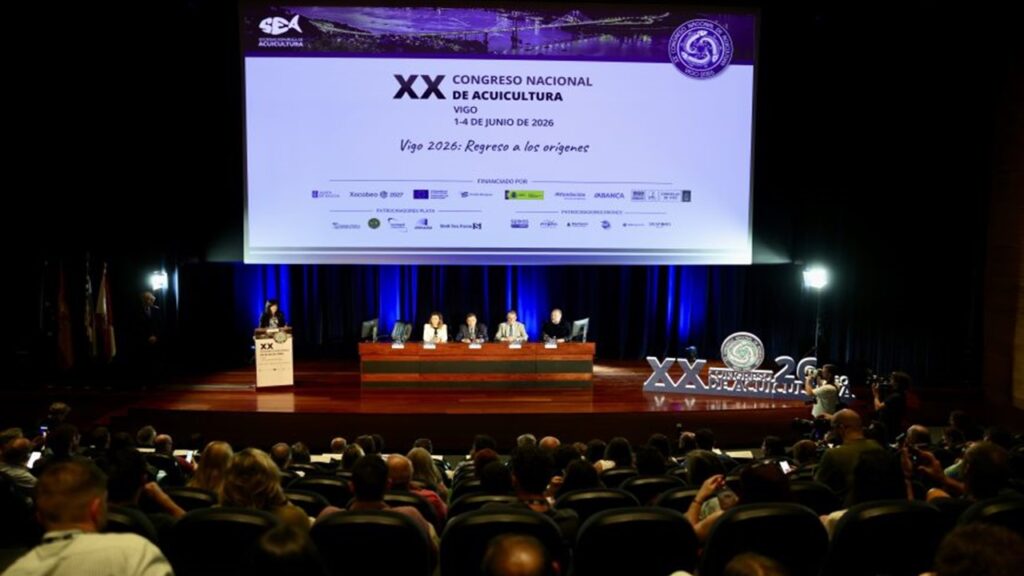
The Oceanic Platform of the Canary Islands –PLOCAN– joins this week in the National Aquaculture Congress 2026 (CNA2026), which is taking place in the city of Vigo, presenting its contribution as a partner of the SIRENA 2 project together with the Institute of Mathematical Sciences (ICMAT-CSIC), consortium coordinator, and the University of Las Palmas de Gran Canaria (ULPGC).
SIRENA 2 represents the natural evolution of the SIRENA project, which laid the foundations for a comprehensive remote system for monitoring, detecting, and predicting the risks of potentially harmful marine events—of natural or anthropogenic origin—in offshore aquaculture areas. Like its predecessor, SIRENA 2 is funded through the PLEAMAR Program of the Biodiversity Foundation (Ministry for Ecological Transition and the Demographic Challenge) and co-financed by the European Union through the European Maritime, Fisheries and Aquaculture Fund (EMFAF). The project runs from February 2026 to August 2027, with EU funding of €315,000.
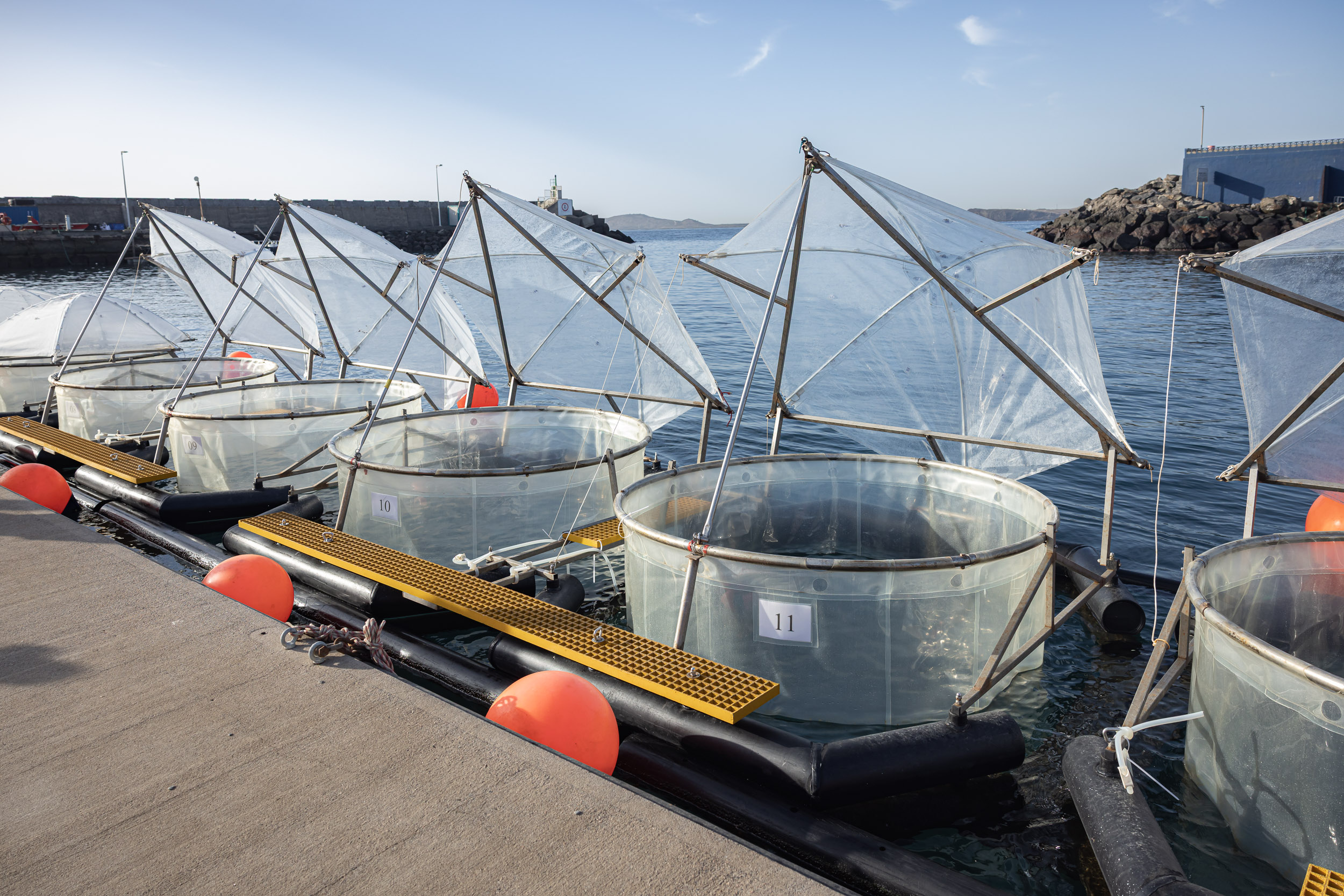
Compared to its predecessor, SIRENA 2 incorporates substantial technological improvements, expands its geographic coverage, and increases the level of automation in its processes. The system is structured around three complementary pillars: advanced remote sensing using Sentinel-1/2/3 imagery and artificial intelligence to detect algal blooms, spills, or abnormal turbidity; enhanced in-situ observation with autonomous platforms and oceanographic surveys; and automated operational response, which integrates all data into high-resolution hydrodynamic models capable of projecting risks up to 60 hours in advance.
PLOCAN’s contribution to the consortium is strategic and unique, providing the project with its fleet of Autonomous Marine Observing Vehicles (VIMAS) with dedicated science payloads addressed to operate autonomously and for extended periods in a wide range of weather conditions. This significantly increases in-situ observation capabilities, collecting continuous, high-quality oceanographic data—temperature, salinity, currents, fluorescence, acoustics, among others—which are essential for feeding and validating the high-resolution numerical models developed by ICMAT-CSIC.
This near-real-time data integration represents a qualitative leap forward compared to conventional observation methods, improving the reliability of predictions and, consequently, the ability to respond to events that may compromise the viability of offshore aquaculture farms in Gran Canaria.
The presentation of SIRENA 2 at CNA2026 highlights the growing role of ocean technology in the sustainable management of marine aquaculture. The combination of satellites, autonomous vehicles, and state-of-the-art predictive models proposed by this project offers the sector a concrete tool to anticipate risks, minimize losses, and move towards a more informed, resilient, and environmentally responsible activity.
Project SIRENA 2 | Programa Pleamar – Fundación Biodiversidad | Cofinanciado por FEMPA – Unión Europea – https://www.programapleamar.es/proyectos/sirena-sistema-remoto-integral-de-monitorizacion-deteccion-y-prediccion-de-riesgos-de