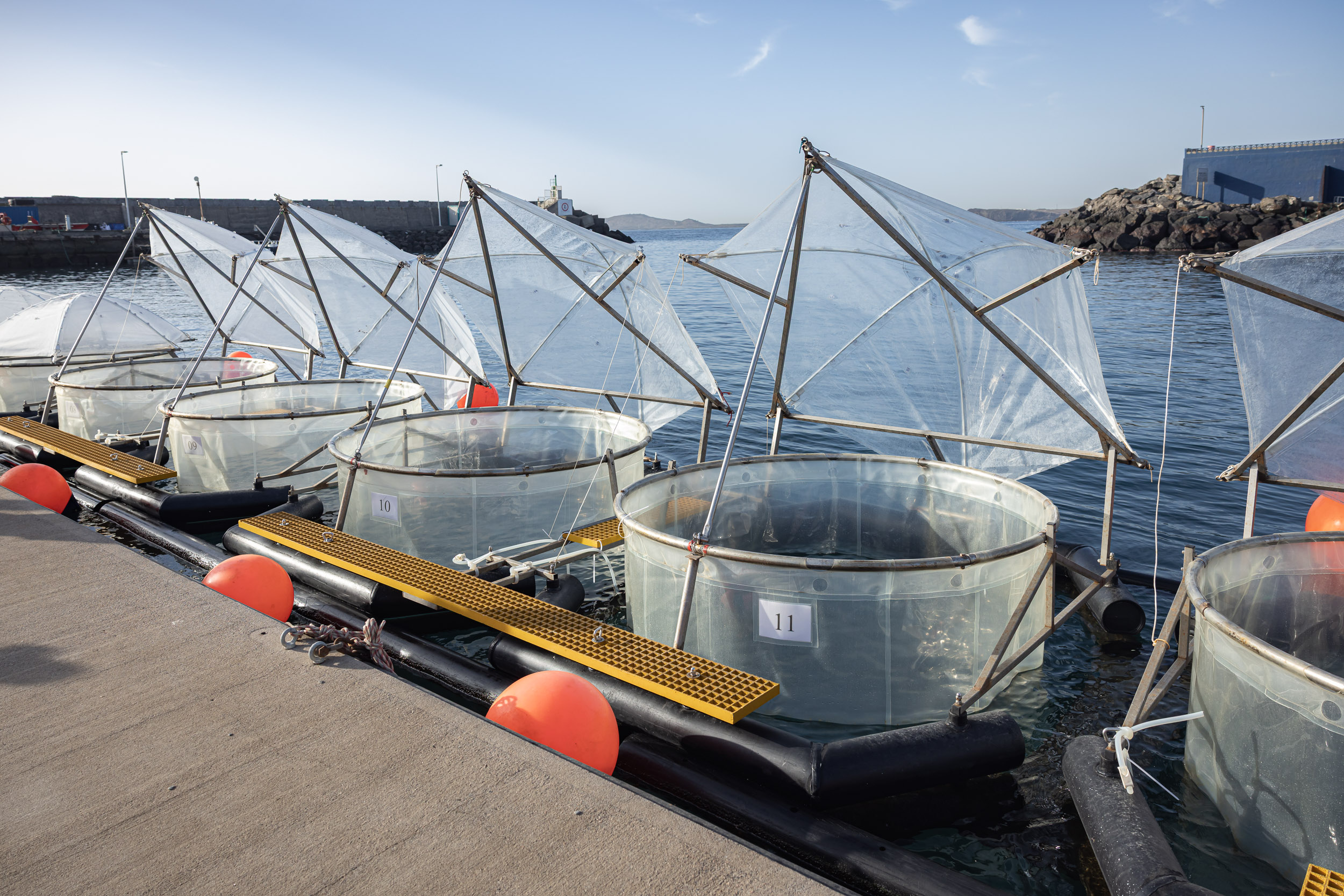
The last week of February has brought yet another calima episode to the Canary Islands, with a layer of Saharan dust blanketing the archipelago for several days. Against this meteorological backdrop, the Oceanic Platform of the Canary Islands (PLOCAN) carried out a new seasonal sampling campaign at its Test Site, with the aim of continuing the long-term monitoring series that the institution has maintained uninterruptedly since 2011.
During the operation, the technical team collected a set of key variables to assess the state of the marine environment: temperature, salinity, dissolved oxygen, nutrients, turbidity, and chlorophyll concentration. The coincidence with the calima episode adds particular scientific value to this campaign, as inputs of mineral dust from the African continent can significantly influence surface marine chemistry and biology.
The campaign also included an environmental characterisation prior to the start of activities under the European project PHAROS, which aims to explore nature-based solutions for ecosystem restoration and the development of sustainable aquaculture in the Atlantic. Establishing a baseline environmental profile before any intervention is essential to ensure that trials are conducted under rigorous scientific criteria.