The European consortium of the PLOTEC project (PLOCAN Tested Optimised Floating Ocean Thermal Energy Conversion Platform) has held a coordination meeting at the facilities of the Plataforma Oceánica de Canarias (PLOCAN) to address the final stage of this pioneering initiative, which develops and tests a floating OTEC (Ocean Thermal Energy Conversion) platform designed to withstand extreme offshore conditions.
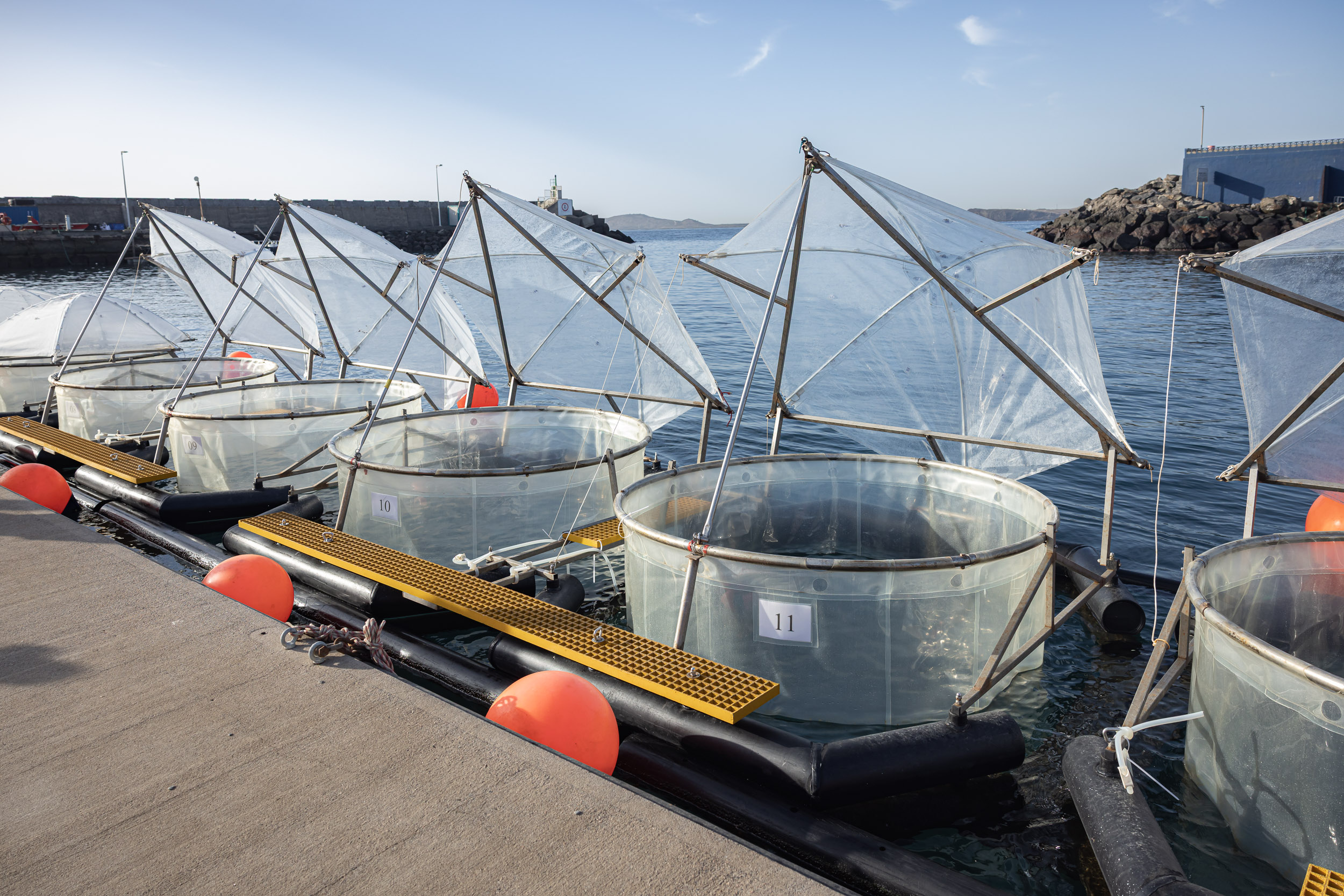
PLOTEC pursues an ambitious objective: advancing a technology capable of supplying clean and continuous energy to island territories, even during storms. In October 2025, PLOCAN’s test site hosted the “Don” prototype, conceived to operate safely in open-sea conditions and deliver stable electricity by harnessing the ocean’s thermal gradient.
In addition to PLOCAN (Spain), the consortium includes Global OTEC, University of Plymouth and Cleantech Engineering (United Kingdom), Quality Culture (Italy), WavEC Offshore Renewables (Portugal) and AGRU Kunststofftechnik (Austria).
During the meeting, partners reviewed the project’s progress, analysed the challenges experienced at PLOCAN’s test site, and agreed on a joint work plan to complete the remaining activities before the project concludes, scheduled for mid-2026.
One of the key issues addressed was the impact of the adverse weather conditions recorded in recent months at the test area. Although rough seas and turbulence posed logistical challenges for operations, the consortium agreed that these conditions proved especially valuable in stress-testing the prototype under demanding scenarios, generating real-world data to improve the analysis of its performance under strong wave conditions.
The meeting also reviewed the main milestones achieved to date and established a roadmap for the coming weeks, focused on scheduling new testing campaigns at PLOCAN’s site, integrating experimental results into design and simulation models, and strengthening technical coordination among participating entities to fulfil the scientific and engineering objectives.
PLOTEC is funded by the European Union’s Horizon Europe programme and the United Kingdom Research and Innovation (UKRI) programme, with a total investment of €3.5 million.
The project aims to accelerate the deployment of OTEC solutions in Small Island Developing States and EU Outermost Regions in tropical areas, contributing to a more resilient energy transition with reduced dependence on fossil fuels.
Ocean Thermal Energy Conversion (OTEC) harnesses the temperature difference between warm surface waters and cold deep waters to generate continuous electricity, with particular potential in tropical regions.