A consortium of national and international scientific institutions has launched GYROVAGO, a four-year research project aimed at gaining a deeper understanding of how a complex system such as the eastern region of the North Atlantic subtropical gyre functions. The project will address key questions for society: how much capacity it has to absorb CO₂, how it is changing due to sea warming and marine heatwaves, what role the food web plays in the carbon cycle, and how microplastic pollution affects it.
Funded under the 2024 Knowledge Generation Projects call, the initiative brings together teams in physics, chemistry, and marine biology from IEO-CSIC, the University of Cádiz, PLOCAN, and ULPGC, as well as collaborators from centers and experts in Portugal, Germany, Sweden, Norway, and the United Kingdom.
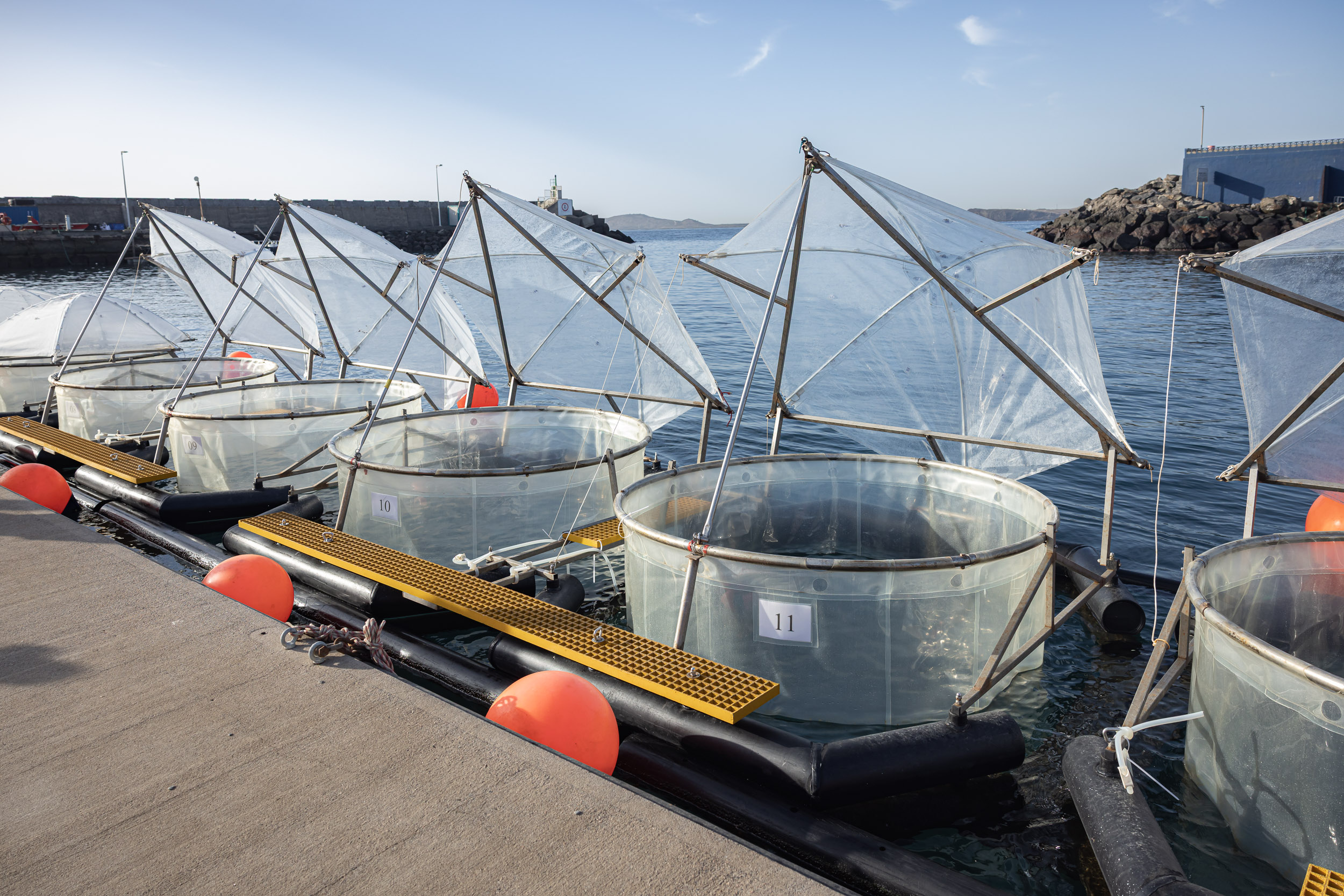
One of the project’s distinctive contributions will be the use and strengthening of the ESTOC ocean station (European Station for Time-series in the Ocean, Canary Islands), coordinated by PLOCAN. Located north of Gran Canaria, ESTOC is internationally recognized for its long observation record of physical and biogeochemical variables. ESTOC is part of the European research infrastructures (ERIC) ICOS — Integrated Carbon Observation System — and EMSO — European Multidisciplinary Seafloor and Water Column Observatory — thus contributing to the European effort in sustained ocean observation and in generating time series and reference data to better understand the ocean–climate system. The continuity of these time series makes it possible to detect trends, distinguish natural variability from signals of global change, and provide context for oceanographic campaigns, linking local observation capacities with large-scale processes in the northeastern Atlantic.
GYROVAGO will combine the analysis of historical data with new observations, including two 25-day oceanographic campaigns (in winter and autumn) and specific observatory maintenance tasks. This strategy will make it possible to compare seasonal and interannual variability and to better characterize key oceanographic processes such as mixing and changes in vertical stratification, as well as to assess mesoscale processes, nutrient availability, phytoplankton productivity, zooplankton and micronekton dynamics and their contribution to the biological carbon pump, in addition to the distribution of microplastics in relation to ocean dynamics.
The data generated by the project will be made publicly available in an open catalogue of reference data, facilitating its use by the research community, public administrations, and citizens.
The results will help anticipate impacts on biodiversity and fisheries, improve environmental management, and guide public decision-making in response to climate change, with particular relevance for coastal regions such as the Canary Islands, where the ocean is a strategic source of wealth, employment, and food security.
GYROVAGO stands for ‘Northeastern Atlantic Subtropical Gyre: Carbon cycle, trophic dynamics, microplastic pollution, and variability of physical factors in the era of global change.