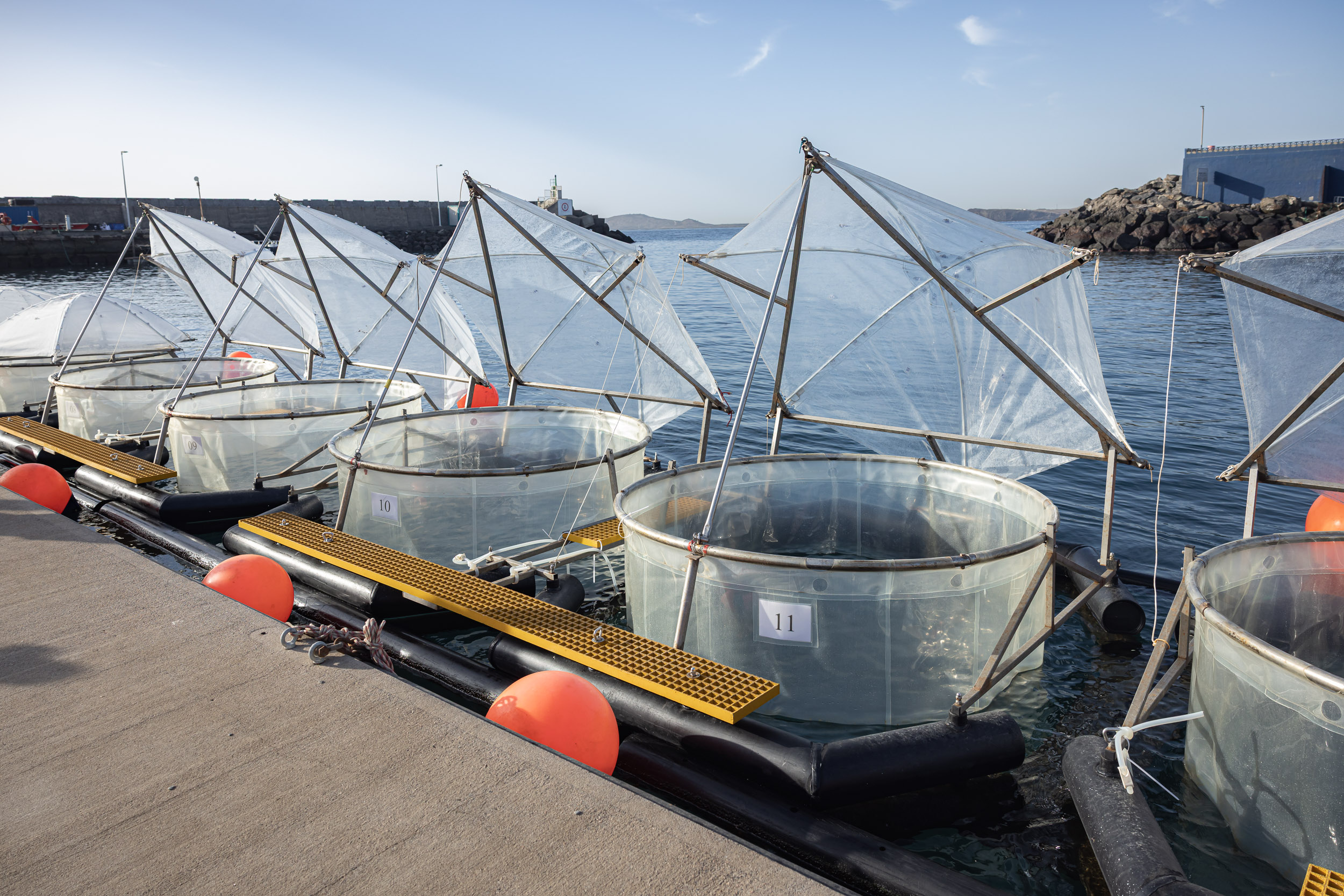
The port of Granadilla on the island of Tenerife has been the operational setting where the validation tests of the Pandora multispectral camera have been successfully carried out, developed by the University Institute of Applied Microelectronics (IUMA) of the University of Las Palmas de Gran Canaria (ULPGC) within the framework of the PERSEO project (Solar Autonomous Aerial Platform for the Monitoring of Polluting Events in the Marine Ecosystem), in cooperation with the environmental consulting company e-Littoral and the Oceanic Platform of the Canary Islands (PLOCAN), and coordinated by the Robotics Unit of the Technological and Renewable Energy Institute (ITER).
The camera, integrated into the Matrice 350 RTK drone operated by ITER, has been designed to detect organic and plastic contaminants in the marine ecosystem, by capturing information in multiple spectral bands. During the test-operations, flights were conducted over residual discharge outfalls and water samples were taken from a boat for laboratory validation. As a complementary test, the Micasense RedEdge P sensor was used to compare results and evaluate the accuracy of the developed system against commercial technologies. As part of the validation tests, a set of floating buoys with different samples of plastics was also used to simulate marine debris and test the Pandora camera’s ability to identify different types of plastics from the air. The integration of this technology in an autonomous aerial platform allowing to gather data in real time and wide coverage, especially useful in areas of difficult access.
Next and final validation tests of the PERSEO system are already scheduled to be undertaken on the island of La Palma, where it is planned to include an uncrewed surface vehicle (USV) belonging to PLOCAN’s VIMAS fleet with specific scientific sensor-payload addressing the project objectives.
The PERSEO project is proposed as a solution for monitoring the marine ecosystem through the processing of multispectral images collected from an uncrewed solar aerial platform. The main objective of PERSEO is the development of an autonomous, zero-emission and environmentally friendly aerial platform thanks to the use of solar energy to enhance its autonomy, equipped with different sensors (low-cost multispectral cameras developed specifically for this purpose) and algorithms based on Artificial Intelligence (AI) integrated into electronic systems capable of running real-time applications for ocean monitoring.
The 36-month PERSEO project (CPP2021-008527) is funded by the Ministry of Science, Innovation and Universities and the State Research Agency (10.13039/501100011033) and by the European Union within the framework of the Next Generation EU Recovery Plan and the Spanish Recovery, Transformation and Resilience Plan (PRTR).