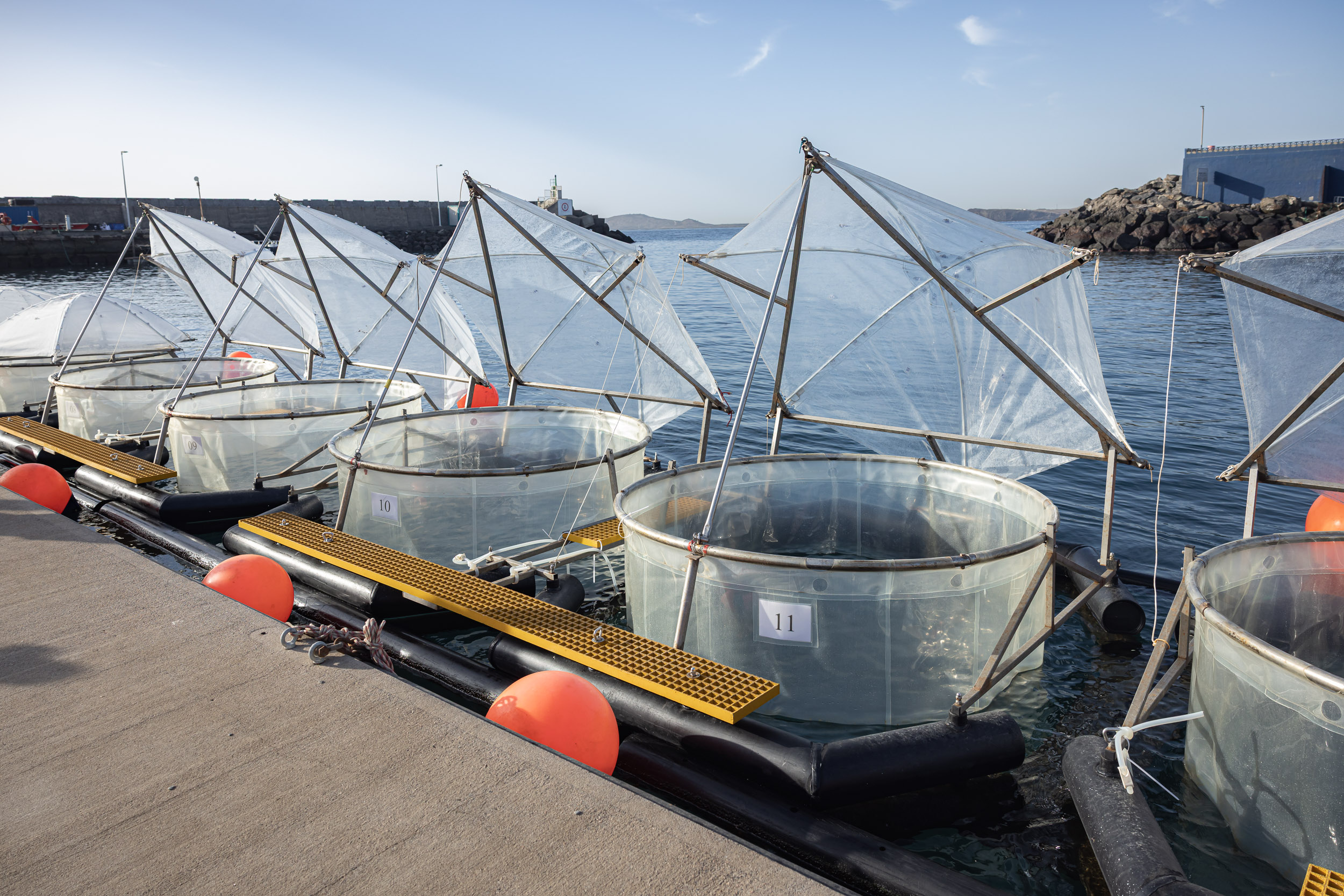
Researchers from the Oceanic Platform of the Canary Islands (PLOCAN) participated in the International Symposium on Marine Science, held in Cádiz, presenting work focused on marine observation, climate change, and the improvement of metocean data.
The latest advances in marine science, ocean observation, and environmental data management were presented in two scientific papers co-authored by Andrés Cianca, Pablo Fernández-Moniz, and Raquel Suárez. The papers address two key challenges facing marine research today: the need to maintain long-term ocean observations to understand the effects of climate change, and the importance of transforming data from various sensors into reliable, traceable, and high-quality scientific products.
The first contribution, “ESTOC (1994–2030): Building an Integrated Ocean Observatory from a Long-Term Time Series,” sets out a roadmap for developing more integrated ocean observatories capable of combining physical, biogeochemical, and biological information. The study highlights the value of long-term time series for detecting changes in the ocean.
It also proposes strengthening biological observation, incorporating new monitoring capabilities, and improving the data strategy to support forecasting, the attribution of environmental changes, and the planning of scientific campaigns.
The second contribution, “From Heterogeneous Sensor Data to High-Quality Time-Series Products: A Data Workflow and Quality-Control Framework for ESTOC (EMSO Canarias),” focuses on the advanced management of metocean data. It presents a workflow that integrates data from different sensors, applies automated quality-control procedures, and ensures information traceability. These records are used to generate scientific products such as sea-surface temperature and air-temperature time series, which are useful for analyzing annual cycles, daily data, and temperature anomalies. The comparison with ERA5 data confirms the consistency of the system and its value for long-term ocean and climate monitoring.

Through these contributions, PLOCAN strengthens its role in developing scientific and technological tools to improve ocean observation, support climate-change research, and provide the scientific community with high-quality data.
This work was funded under the project “Innovation in Artificial Intelligence-Based Services for Marine Spatial Planning and Environmental Assessment,” coordinated by the Oceanic Platform of the Canary Islands (PLOCAN) and funded by the Gran Canaria Island Council (Resolution CGC/2024/11833, Department of Environment, Climate, Energy and Knowledge — Economy and Innovation Unit and by the Spanish Ministerio de Economía y Competitividad through the project GYROVAGO (PID2024-162612NB-I00).