The Oceanic Platform of the Canary Islands (PLOCAN) today welcomed at its Taliarte headquarters a delegation from the Regional Ministry of Industry, Energy and Mines of the Regional Government of Andalusia, in what is the first institutional meeting between both parties. The purpose of the visit was to gain first-hand knowledge of PLOCAN’s role and services as a Unique Scientific and Technical Infrastructure and to analyse possible avenues for collaboration in the fields of the blue economy and the energy transition.
The meeting was attended by the Andalusian Regional Minister for Industry, Energy and Mines, Jorge Paradela; the Director of PLOCAN, José Joaquín Hernández Brito; the Deputy Minister for Ecological Transition, Fight against Climate Change and Energy of the Government of the Canary Islands, Julieta Schallenberg; and the Deputy Minister for Industry, Energy and Mines of the Regional Government of Andalusia, Cristóbal Sánchez.
The Andalusian Regional Minister, Jorge Paradela, stressed that the visit to PLOCAN’s onshore facilities “is an excellent opportunity to learn about a benchmark infrastructure in ocean observation, the development of clean technologies linked to the marine environment, and experimentation in marine renewable energies, including offshore wind.”
He also underlined that Andalusia has a Blue Economy Strategy in which several regional ministries participate in a coordinated way and which mobilises a significant budget allocation. He recalled that sea-related activities account for tens of thousands of companies and hundreds of thousands of jobs along some 1,000 kilometres of Andalusian coastline.
“We have come to learn from PLOCAN’s experience and to deepen an exchange of knowledge that will allow us to drive new projects, especially in areas such as offshore wind and CO₂ capture through nutrients present in the marine environment, where there is also clear industrial interest in Andalusia in the development of large platforms and technological solutions,” he added.

For his part, PLOCAN’s Director, José Joaquín Hernández Brito, outlined the track record and capabilities of the infrastructure, which acts as a test bed for marine technologies and as a catalyst for blue economy initiatives. He pointed out that PLOCAN works in areas ranging from marine renewable energies, such as offshore wind and wave energy, to open-ocean aquaculture, marine biotechnology, ocean observation and the use of autonomous vehicles for long-duration missions.
Hernández Brito recalled that “the Canary Islands have exceptional natural, port and scientific-technical conditions, as well as an attractive fiscal framework, which position the Archipelago as a strategic hub for the development of new sea-related activities, with a direct impact on wealth creation, environmental protection, food security and energy security.”
The director of PLOCAN noted that, in the coming years, “a significant increase is expected in activities related to the production of energy and food in the marine environment, as well as in coastal management supported by unmanned vehicles and advanced technological solutions,” and highlighted PLOCAN’s role as a test and validation platform prior to the market deployment of these technologies.
The Deputy Minister for Ecological Transition, Fight against Climate Change and Energy of the Government of the Canary Islands, Julieta Schallenberg, emphasised the challenges shared by the Canary Islands and Andalusia in terms of energy transition and the fight against climate change.
“Our territories face many common challenges and also many synergies in how we approach decarbonisation. In the energy sphere, our future necessarily involves looking to the sea and harnessing in a sustainable way the potential of the blue economy,” she said.
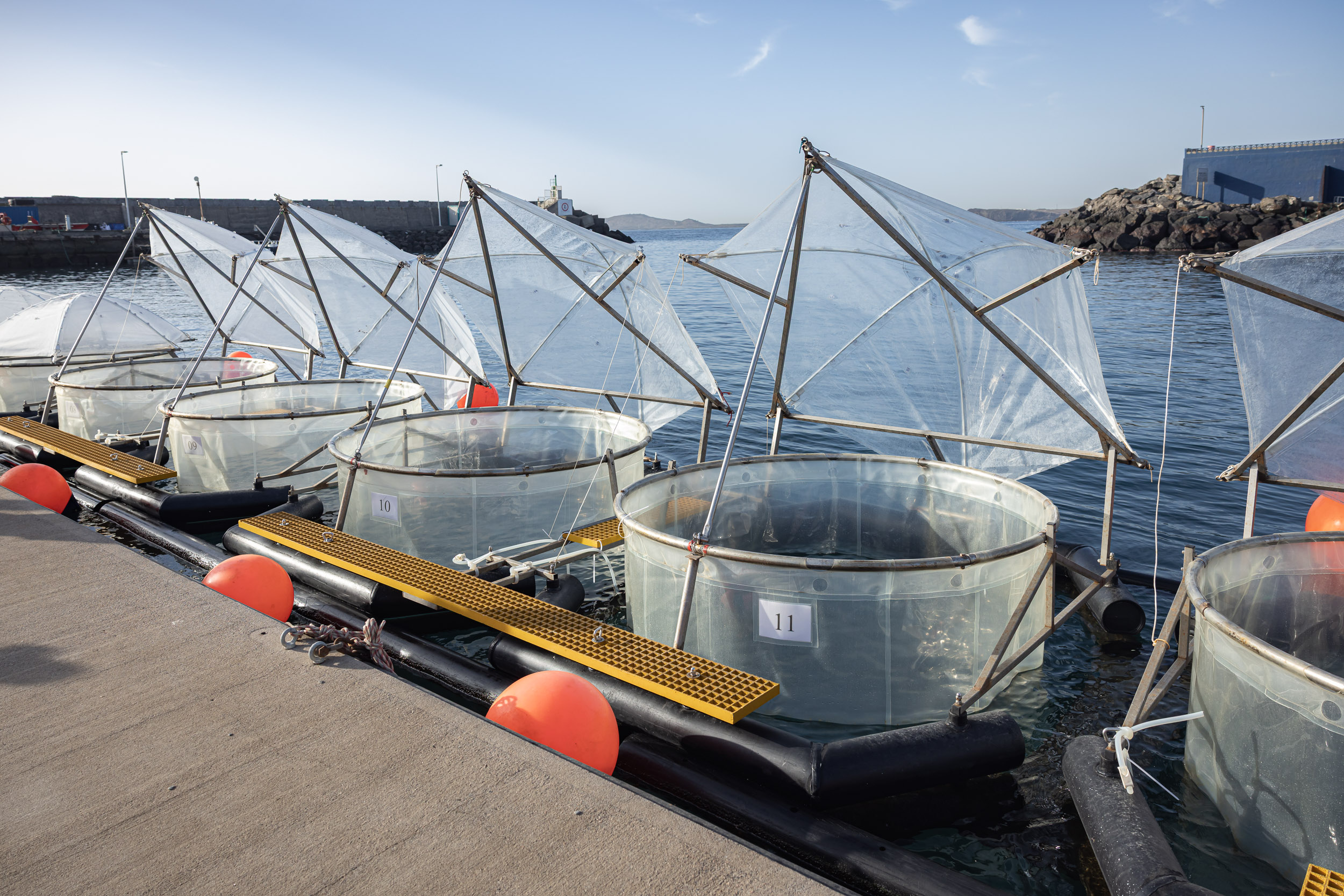
Schallenberg particularly highlighted the opportunities in the field of CO₂ capture and so-called blue carbon. She recalled that “Andalusia has already launched initiatives in marshes and coastal ecosystems, while the Canary Islands are advancing in methodologies for carbon dioxide absorption in ocean waters. We are sharing approaches and methodologies so that we can move forward faster. PLOCAN is a key facility for testing pilot projects that will enable us to develop and validate these blue carbon capture methodologies with scientific and environmental guarantees.”
Both the Andalusian delegation and the representatives of PLOCAN and the Government of the Canary Islands agreed that this first meeting opens up a potential line of joint work between the Canary Islands and Andalusia, aimed at accelerating the deployment of innovative solutions in the blue economy and energy transition, with high potential for job and wealth creation and with a strong focus on protecting the marine environment.